Losing a large amount of weight changes a lot. It doesn't always change the skin. For many people, loose skin is what's left after the scale has done its part, and the question becomes when surgery makes sense.
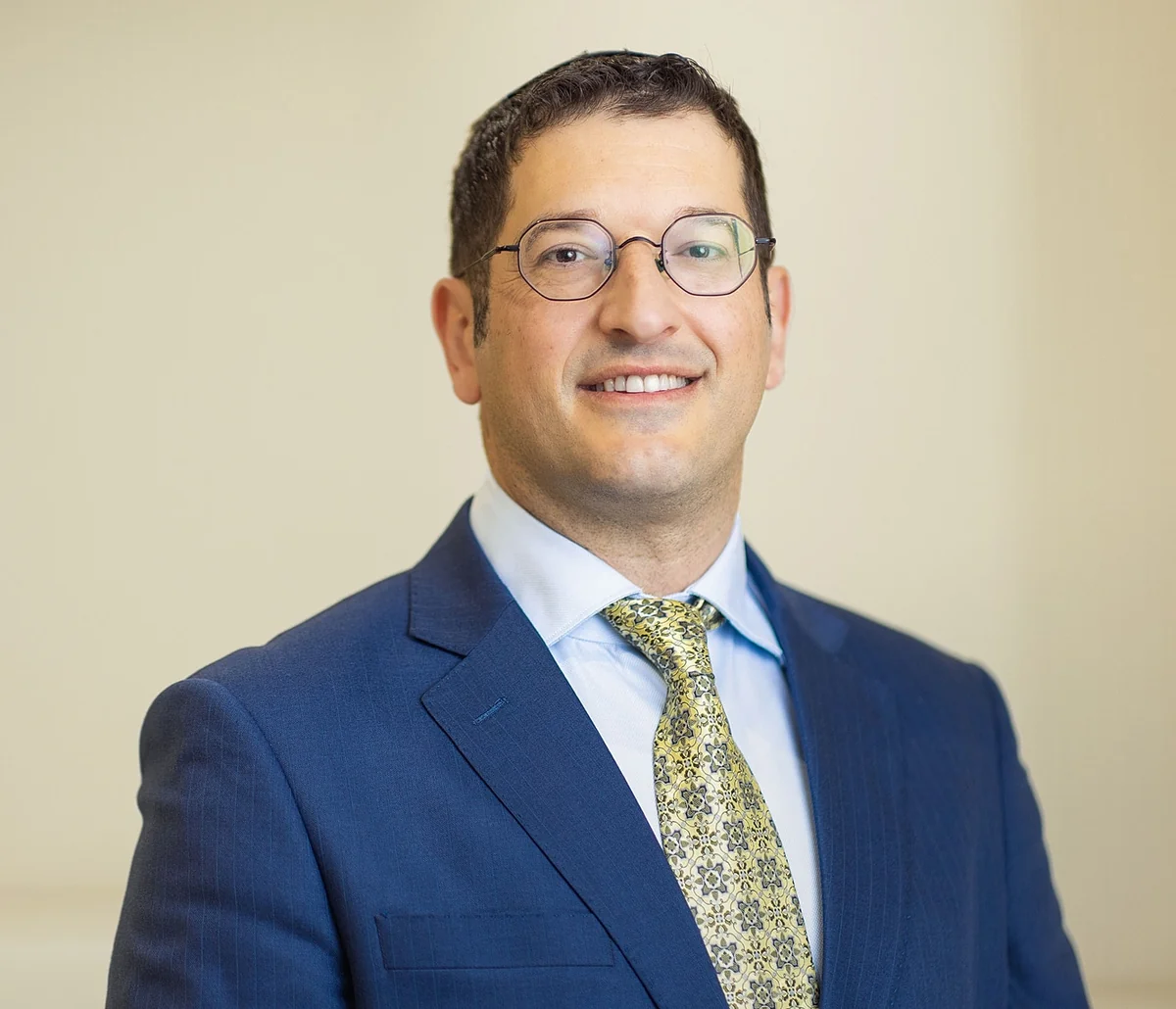
To understand how a specialist approaches that decision, we spoke with Dr. Ron Somogyi, a plastic and reconstructive surgeon in Toronto and the founder of FORM Face + Body in Midtown. Body contouring after weight loss is the centre of his surgical practice.
"My passion from a surgical perspective is really body contouring after significant weight loss," Dr. Somogyi told us.
This guide brings together what he shared, what FORM publishes about candidacy, and how OHIP treats skin removal surgery in Ontario.
Who is body contouring after weight loss for?
Dr. Somogyi's patients reach him by many routes. "These can be patients who have lost a lot of weight through bariatric surgery, weight loss medications, diet and lifestyle changes, post-pregnancy, or any other method," he said.
What they share is the result. "These are patients who have a significant amount of loose skin and are generally uncomfortable," he explained. "They really don't look the way they feel, which is generally much better than the way they look."
GLP-1 medications have added a new group to that picture. Weight can come off quickly on these drugs, and many people are still deciding with their doctor whether to continue, taper or stop. Both points matter for timing, because surgery is planned around where your weight ends up.
Dr. Somogyi describes the goal plainly: "My job in body contouring after weight loss is to remove the excess skin and contour the remaining skin so that they look and feel great."
How long should weight be stable before a tummy tuck?
The short answer is: until it has genuinely stopped changing. Dr. Somogyi has put it simply on FORM's blog: "Operating while weight is still changing compromises the result" [1].
FORM publishes its baseline candidacy criteria for post-weight-loss surgery [2]:
Weight stable for at least three months
BMI below 32
Non-smoking, or quit at least two months before surgery
Three months is the minimum. "We generally want weight to have plateaued for several months before we plan surgery," Dr. Somogyi wrote [1]. The right wait for any one person is decided at consultation.
The reasoning is practical. Surgery is planned around the body as it is on the day. Further loss can leave new loose skin, and regain can stretch the result.
For people on a GLP-1, there's one more question worth raising with both your surgeon and your prescribing doctor: what's the long-term plan for the medication, and is your weight steady under that plan?
If you're taking a GLP-1 when surgery is booked, tell your surgical and anesthesia teams. Multi-society guidance released in 2024 says many patients can continue these medications before elective surgery, with a liquid diet for 24 hours beforehand for those at higher risk [3]. Your care team will set a plan for you.
What can exercise change, and what can't it?
Exercise is worth doing before and after body contouring. It's not a substitute for removing skin.
What strength training and regular activity can help with:
Building and keeping muscle while weight comes off
Holding a stable weight once you reach your goal
Overall fitness, which supports a smoother recovery
What it can't do is remove skin that has been stretched and no longer recoils. Training won't lift a hanging fold of lower-belly skin, or loose skin on the arms, thighs or back.
That skin isn't just cosmetic. As Dr. Somogyi has written, "Loose skin isn't a cosmetic footnote to weight loss" [1]. When it stays after weight has held steady for months, surgery is the way it is removed.
How are procedures staged after major weight loss?
People who lose a lot of weight often have loose skin in more than one area. Addressing all of it in a single operation isn't always safe or practical, so larger cases are often split into stages.
At FORM, staging is decided case by case [2]. Dr. Somogyi describes building "a staged plan around your priorities, your health and your life" [1]. That means weighing what bothers you most, what can safely be combined and how far apart procedures should be.
Procedures FORM lists for post-weight-loss patients include [2]:
Extended, fleur-de-lis and mini tummy tucks, with muscle repair
Medial thigh lift
Breast lift (mastopexy) and gynecomastia surgery
Liposuction with J-Plasma
FORM's published figures put surgery at 4 to 7 hours. Most patients return to a desk job in about three weeks and to strenuous activity after 6 to 8 weeks [2].
Dr. Somogyi stresses that this is not routine surgery. "This is highly specialized work that requires significant training and experience, as well as a dedicated team and very specific pre- and post-operative management," he told us.
Is skin removal surgery covered by OHIP?
One procedure can be: a panniculectomy, which removes the hanging apron of skin and fat from the lower abdomen.
OHIP has described three requirements for an insured panniculectomy [4]:
The fold hangs to or below the pubic bone (the symphysis pubis).
It causes health problems, such as recurring rashes, infections or pain.
Weight has been stable for at least six months.
Approval isn't automatic. In one reported case, OHIP initially refused because it measured the fold as not reaching the pubic bone. The patient won on appeal after newer measurements showed it did [4].
Other skin removal is generally not insured. Ontario's Health Services Appeal and Review Board has pointed to the Schedule of Benefits rule excluding removal of excess skin or fatty tissue other than for panniculectomy. In that case, it upheld OHIP's refusal to pay for removing loose inner-thigh skin, even though it caused pain [5].
A panniculectomy is also narrower than a tummy tuck. It removes the hanging fold. A tummy tuck typically also tightens the abdominal muscles and reshapes the whole midsection.
FORM operates on a private-pay model. Its website notes that a portion of a panniculectomy may be covered when medically necessary, and that the clinic can help with claim documentation [2]. Whether you qualify is something to ask directly at your consultation.
What does excess skin removal surgery cost?
FORM doesn't publish set prices for post-weight-loss surgery. Its website says price ranges are available on request [2], and its financing page lists patient financing through Beautifi and Medicard [6]. Cost generally depends on which areas are treated, how many procedures are combined and how many stages a plan needs.
Why we recommend Dr. Somogyi and FORM
If you're in Toronto and considering body contouring after weight loss, Dr. Somogyi and FORM Face + Body belong on your consultation list. Here's what stands out.
It's the centre of his practice. Body contouring after significant weight loss is Dr. Somogyi's surgical focus, not a side service.
Reconstructive training. He is a Royal College-certified plastic surgeon (FRCSC) and an Assistant Professor at the University of Toronto. He also performs complex breast reconstruction at North York General Hospital, including DIEP flap surgery [1].
Preparation before the operating room. FORM checks nutrition before surgery, including protein, iron, vitamin B12 and vitamin D. Its FORM Life+ clinicians review bloodwork and correct deficiencies, and patients who have lost muscle get a plan to rebuild strength [1].
A plan built around you. Procedures are staged around your priorities and health, and the trade-offs, including scarring, are discussed before you decide [1].
An accredited surgical facility. Surgery takes place at the Toronto Outpatient Surgery Centre [1], and your overnight stay is included in the cost [2].
Recovery support under one roof. FORM offers compression care, hyperbaric oxygen therapy and other resources in its building to support wound healing [2]. Follow-up continues through healing and scar care, and FORM's longevity and performance clinicians help patients keep their weight off [1].
Practical help. FORM can help document a panniculectomy claim for OHIP [2], and offers patient financing through Beautifi and Medicard [6].
As Dr. Somogyi put it: "I am completely obsessed with delivering the best possible patient experience. That doesn't just mean great service and great surgery."
Questions to bring to your consultation
How long has my weight needed to be stable for this procedure?
Should anything change with my medication before surgery?
Which areas would you treat first, and why?
Will this be one operation or several stages?
Do I meet OHIP's criteria for a panniculectomy?
What does recovery look like for my job and routine?
Frequently asked questions
How long after weight loss should I wait for a tummy tuck? FORM's published minimum is three months at a stable weight, with a BMI below 32 [2]. Your surgeon may recommend waiting longer.
Can I have body contouring while taking a GLP-1 medication? Many patients can continue these medications before elective surgery under current guidance [3]. Tell your surgical and anesthesia teams, and follow their plan.
Is a panniculectomy covered by OHIP? It can be, when the fold hangs to or below the pubic bone, causes health problems, and weight has been stable for six months [4].
Is a body lift covered by OHIP? Generally no. OHIP excludes removal of excess skin or fat other than panniculectomy [5].
How many surgeries will I need? It depends on how many areas are involved. At FORM, larger cases may be staged, decided case by case [2].
About Dr. Ron Somogyi
Dr. Ron Somogyi, MSc, MD, FRCSC, is a Toronto plastic and reconstructive surgeon, an Assistant Professor at the University of Toronto, and the founder of FORM Face + Body [1]. His surgical focus is body contouring after significant weight loss. He also performs breast reconstruction at North York General Hospital, including implant-based and DIEP flap reconstruction, as well as skin cancer surgery, cosmetic breast surgery and some emergency work.
He describes FORM as a campus focused on human optimization. "We put every service we could think of, every treatment and specialist, under one roof, so that patients can really look at what in their health they can optimize, and live their best life," he said.
View Dr. Somogyi's profile · Explore the FORM Face + Body profile · Book a consultation at FORM
This article is general information, not medical advice or a promise of results. Featuring a surgeon is not a clinical ranking. Confirm services and candidacy directly with the practice, and verify any physician's credentials on the CPSO Physician Register.
Sources
Dr. Ron Somogyi, Why I Love Body Contouring After Weight Loss, FORM Face + Body, October 27, 2026.
FORM Face + Body, Post-Weight Loss Surgery in Toronto.
American Society of Anesthesiologists, New multi-society clinical practice guidance released, October 29, 2024.
CTV News Northern Ontario, Northern Ont. woman wins fight to have OHIP pay for surgery to remove excess skin.
Law Times, Excess skin due to weight loss not a post-traumatic deformity covered by OHIP, board finds, February 1, 2021.
FORM Face + Body, Financing.