Most men don't book a urologist because of a diagnosis. They book because something feels off. They're tired all the time, their drive has dropped, or erections aren't what they used to be. Then they start searching.
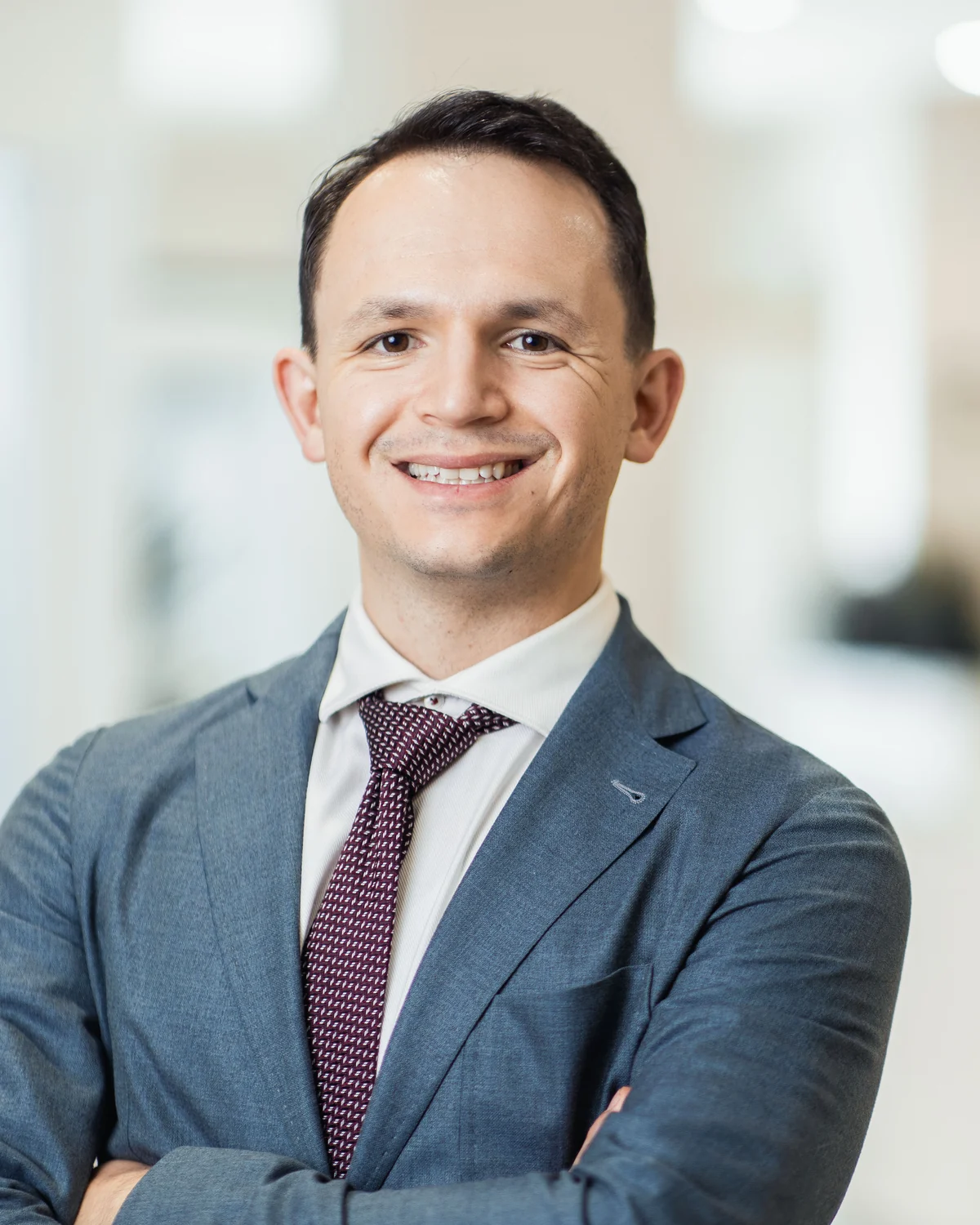
To understand how a specialist works through those questions, we spoke with Dr. Noah Stern, a Toronto urologist and the medical director of FORM Men's Health at the FORM Campus in Midtown. His practice centres on men's sexual and hormonal health, including low testosterone, erectile dysfunction, Peyronie's disease and reconstructive urology [1][2].
This guide brings together what he told us, what FORM publishes about its men's health program, and what the clinical evidence says about the treatments men ask about most.
What men in Toronto are searching for
Dr. Stern sees the same questions again and again. "The most common searches that lead patients to my office include things like, 'Why am I so tired all the time?'" he told us. The rest of his list:
- Andropause, and "Do I have low testosterone?"
- "Why can't I keep an erection?"
- Shockwave therapy, and "Is there something that works besides pills?"
- Male enhancement, and "Is penile enlargement safe?"
Each has an answer, but rarely a one-line one. Fatigue and low drive can come from testosterone, sleep, weight, medications or stress. Erection problems can come from blood flow, hormones, nerves or a mix. Working out which one applies to you is what a specialist assessment is for.
Is it low testosterone? A diagnostics-first approach
Low testosterone is one of the most common reasons men look for a testosterone doctor in Toronto. Many of the men who reach FORM have already tried another route. "Patients searching for low testosterone symptoms or testosterone doctors Toronto often find their way to our clinic after being unimpressed or uncertain with an online clinic," Dr. Stern said.
His approach starts with the whole picture rather than a single number. "At our clinic, we focus on a diagnostics-first approach, with a thorough history and physical exam, looking at your energy, drive, mood, sleep, weight and medications," he said.
Is andropause real?
Andropause is a common search term, and many men use the word to describe how they feel. Dr. Stern is careful with it. Like many men's health specialists, he doesn't consider andropause a true condition in the way menopause is.
He sees it instead as a cluster of symptoms linked to poor diet, poor sleep and too little exercise. Those symptoms are associated with aging, but not caused by it. That distinction shapes treatment: the first step is finding what is actually driving the symptoms, not assuming age is to blame.
What a men's hormone panel should include
The bloodwork goes well beyond one testosterone result. Dr. Stern described a panel that measures:
- Total testosterone and bioavailable testosterone
- Luteinizing hormone (LH) and follicle-stimulating hormone (FSH), "the brain hormones that drive" testosterone production
- Sex hormone-binding globulin (SHBG), a protein in the blood that affects how much testosterone your tissues can use
- Estradiol
FORM also lists cardiometabolic bloodwork among its men's health diagnostics [1]. A careful workup matters because, under the American Urological Association (AUA) guideline, testosterone deficiency is only diagnosed when a low total testosterone level comes with symptoms or signs [4].
Ruling out other causes
Low energy isn't always hormonal. "I look for alternative causes like sleep apnea, weight, diabetes, medications, lifestyle concerns, psychogenic causes or stressors," Dr. Stern said. The AUA guideline also recommends that every man with testosterone deficiency be counselled on lifestyle changes as part of treatment [4].
TRT and fertility
For men who may want children, fertility belongs in the conversation before testosterone replacement therapy (TRT) starts. "The impact of testosterone therapy on fertility is very important to consider," Dr. Stern said.
Testosterone taken from outside the body suppresses the hormone signals that drive sperm production. That is why the AUA strongly recommends against prescribing it to men who are currently trying to conceive [4]. Alongside injectable and transdermal testosterone, FORM lists fertility-conscious options such as HCG and clomiphene-based therapy, with endocrine monitoring [1].
Why erectile dysfunction isn't one condition
Men looking for erectile dysfunction treatment in Toronto often search for ED treatments that aren't pills, or for an erectile dysfunction specialist. Dr. Stern's starting point is that ED usually has more than one possible cause.
"The way I like to think of it, often, is erectile dysfunction not as one condition," he said. "Sometimes the blood flow in is the issue; sometimes it's the problem of blood leaking out. Often it's the hormones, nerves, stress. Often it's mixed."
FORM describes ED as an early vascular signal that can appear years before heart disease, because the penile arteries are among the smallest in the body [1]. That is one more reason to have it assessed, not just treated.
What a penile duplex ultrasound shows
To tell those causes apart, FORM uses a penile duplex ultrasound, also called a penile Doppler ultrasound. "It's a specialized test that allows us to look at the blood flow through the arteries and veins themselves to give a diagnostic and objective measure of erectile function," Dr. Stern explained. "That allows us to target our treatment to each patient's individual [needs]."
The scan maps blood flow into the penis and can identify venous leak. FORM notes that Dr. Stern performs it himself [1].
ED treatment options beyond pills
As both a men's health specialist and a urologic surgeon, Dr. Stern can offer "the whole slew of treatment options," as he put it. The options he listed run roughly from least to most invasive:
- Oral medications (PDE5 inhibitors)
- Vacuum erection devices and constriction bands
- Traction devices
- Injectable treatment (intracavernosal injections)
- Regenerative therapies such as low-intensity shockwave therapy
- Energy-based therapies such as radiofrequency
- Penile prosthesis (penile implant), "at the end of the line"
That order broadly follows international consensus. The ICSM 2024 recommendations on the medical management of ED, on which Dr. Stern is first author, keep PDE5 inhibitors as first-line treatment for most men. Injections, vacuum devices and penile prostheses are second-line options, chosen with the patient's preferences in mind [3].
Does shockwave therapy for ED work?
Shockwave therapy gets a lot of attention on social media, Dr. Stern noted. Here is how he explains it: "The gist of how shockwave therapy works is it causes a trauma/inflammatory response that then leads to a healing response from the body that leads to improved blood flow and improved endothelial function."
Who it helps is the key question. "The evidence for it shows it's best for mild to moderate erectile dysfunction that is blood-flow related, and it's less likely to help severe cases," he said, "which is why diagnostics and the ultrasound are so helpful."
Published trials point the same way. Randomized, sham-controlled studies show that low-intensity shockwave therapy improves blood-flow-related ED by about four points on the standard erectile function score. A 2024 analysis of three such trials matched the number of sessions, and whether to add daily medication, to the severity of ED [5].
How FORM's shockwave protocol is different
FORM's protocol has one feature that few clinics offer. Each shockwave session includes an intracavernosal injection, so treatment is delivered during an erection. Dr. Stern points to evidence that the tissue absorbs each shockwave better during an erection. The aim is to give every patient the best possible chance of success from the course.
Sessions take about 20 to 30 minutes, and a course is typically 6 to 12 sessions [1]. FORM recommends a diagnostic assessment before starting [1].
Radiofrequency therapy and venous leak
Radiofrequency therapy for ED is newer. "The evidence here is thinner than shockwave, but the results are promising," Dr. Stern said.
He is most interested in its use for venous leak, where blood drains from the penis too quickly to hold an erection. It's a condition, he said, "which has very few good treatment options." FORM offers Apex M radiofrequency on its own or combined with shockwave in what it calls the Restoration Protocol [1].
Penile filler and enlargement: what's realistic
Searches for penile filler and penile enlargement are common, and so is the question of whether they're safe. Dr. Stern's answer is direct: "Filler works to add girth but doesn't add length. It's off-label, and as a procedure it has risks associated with it, but it does have a good cosmetic improvement."
What matters most is who does it and how. "Realistic expectations, as well as an understanding of who is doing the procedure, what techniques they are trained on, as well as pre- and post-care, are essential," he said.
Dr. Stern is trained in penile filler and performs the procedure himself. He does so only after a careful, extensive intake and conversation with each patient about goals, risks and what filler can and can't achieve.
Why we recommend Dr. Stern and FORM Men's Health
If you're in Toronto and looking for a men's health clinic, a TRT clinic or an erectile dysfunction specialist, Dr. Stern and FORM Men's Health belong on your consultation list. Here's what stands out.
- A subspecialist, not a generalist. Dr. Stern is a fellowship-trained urologist (FRCSC) whose practice centres on men's sexual and hormonal health [2].
- He helped write the guidance. He is first author of the ICSM 2024 recommendations on the medical management of ED [3], and serves on the International Society for Sexual Medicine panel that updates global ED recommendations [2].
- Diagnostics first. Full hormone and cardiometabolic panels, plus penile duplex ultrasound performed by Dr. Stern himself [1].
- A shockwave protocol built for results. Each session is paired with an intracavernosal injection, so shockwaves are delivered during an erection.
- The full treatment range in one place. From medication and devices to shockwave, radiofrequency and penile filler and, as a urologic surgeon, penile prosthesis.
- Fertility-conscious hormone care. Treatment options for men who want to protect their fertility [1].
- Expert-led, not volume-led. "Many men's health clinics run on volume, but here we work with expert-led care, diagnostics first, with advanced treatment options that are customized to each patient," Dr. Stern said.
- Part of a wider campus. FORM Men's Health is one of the specialized clinics at the FORM Campus at Yonge and Eglinton, alongside women's health and longevity programs [6]. "We integrate seamlessly with the FORM Campus, which allows us to offer all-inclusive care, with close interactions with our women's health arm, our wellness arm and our longevity arm," he said.
- No referral needed. You can book directly. A consultation fee applies, some diagnostics may be covered by insurance, and many optimization programs are private pay [1].
Questions to bring to your consultation
- Which tests will you run before recommending treatment?
- Could something other than testosterone explain how I feel?
- How would testosterone therapy affect my fertility, and what are the alternatives?
- What is causing my ED: blood flow, venous leak, hormones, nerves or a mix?
- Based on my ultrasound, am I a good candidate for shockwave therapy?
- Which treatments are private pay, and what might insurance cover?
Frequently asked questions
Is andropause a real condition? Not in the way menopause is, in Dr. Stern's view and that of many men's health specialists. Andropause describes a cluster of symptoms linked to poor diet, poor sleep and too little exercise, which are associated with aging but not caused by it.
What does a urologist do for erectile dysfunction? A urologist first works out the cause, using bloodwork and, at FORM, a penile duplex ultrasound [1]. Treatment is then matched to that cause, from medication and devices through to penile prosthesis surgery.
Is shockwave therapy for ED effective? It works best for mild to moderate ED caused by blood flow problems, and is less likely to help severe cases. Trials show a modest improvement compared with sham treatment [5]. At FORM, each session is paired with an intracavernosal injection, because there is evidence shockwaves are absorbed better during an erection.
Does TRT affect fertility? Yes. Testosterone therapy can suppress sperm production, and the AUA recommends against prescribing it to men who are trying to conceive [4]. Fertility-conscious alternatives exist [1].
What is a penile duplex ultrasound? It is an ultrasound of the penis that measures blood flow through the arteries and veins. It gives an objective measure of erectile function and can show whether the problem is blood flowing in or blood leaking out.
What is venous leak? Venous leak is when blood drains out of the penis too quickly to hold an erection. Dr. Stern notes it has few good treatment options, and radiofrequency therapy is being explored for it.
Do I need a referral to see Dr. Stern at FORM? No. FORM Men's Health accepts patients without a referral [1].
Is penile filler safe? It is off-label and carries procedural risks, and it adds girth but not length. The provider matters. At FORM, Dr. Stern is trained in the procedure and performs it himself, only after a careful and extensive intake and conversation with each patient.
About Dr. Noah Stern
Dr. Noah Stern, MD, FRCSC, is a Toronto urologist and the founder and medical director of FORM Men's Health [2]. He studied life sciences at Queen's University, earned his MD at the Schulich School of Medicine and Dentistry at Western University, and completed his urology residency at Western in London, Ontario. He went on to a University of Toronto fellowship in reconstructive, female and neurourology at Sunnybrook under Dr. Sender Herschorn, and trained in men's health, erectile dysfunction and Peyronie's disease under Dr. Gerald Brock [2].
He holds hospital privileges at North York General Hospital and Mackenzie Health, and has worked with Statistics Canada on research into how ethnicity and immigration affect prostate cancer outcomes [2]. FORM Men's Health is at 90 Eglinton Avenue East, Suite 700, in Toronto [1].
View Dr. Stern's profile · Explore the FORM Face + Body profile · Book a men's health assessment at FORM
This article is general information, not medical advice or a promise of results. Featuring a physician is not a clinical ranking. Confirm services and candidacy directly with the practice, and verify any physician's credentials on the CPSO Physician Register.
Sources
- FORM Face + Body, Men's Health.
- FORM Face + Body, Dr. Noah Stern.
- Stern N, Bajic P, Campbell J, et al. Evolving medical management of erectile dysfunction: recommendations from the Fifth International Consultation on Sexual Medicine (ICSM 2024).
- American Urological Association, Evaluation and Management of Testosterone Deficiency.
- Pyrgidis N, et al. The recommended treatment protocol for low-intensity shockwave therapy based on the severity of erectile dysfunction, International Journal of Impotence Research, 2024.
- FORM Face + Body, FORM Face + Body Opens FORM Campus in Midtown Toronto, September 22, 2026.