Two hair-transplant quotes arrive in your inbox. One proposes more grafts than the other.
The bigger number is easy to notice. It feels concrete, something you can compare when so much else about the decision is unfamiliar. But before treating it as the better offer, there is another question to ask: what is the plan for those grafts?
“If you're comparing hair transplants by graft count, you're asking the wrong question,” says Dr. Michael Brandt of FORM Face + Body in Toronto.
He is not dismissing the number. He is asking you to look at what sits behind it.
Start with what a transplant actually does
A hair transplant redistributes existing hair from a donor area to an area affected by thinning or baldness. It does not create a new supply of hair. That basic point, explained in the National Library of Medicine's hair-transplant overview, is why the donor area belongs in every discussion about coverage.
You may hear the words “grafts,” “follicles” and “hairs” used while researching treatment. Before comparing two quotes, ask the practices to clarify exactly what their figures describe and whether the numbers are estimates or planned targets. Do not assume that differently worded figures are directly comparable.
The most helpful explanation connects the proposed transplant to your own scalp: where hair would be taken from, where it would be placed and what improvement the clinician considers achievable.
The number needs a drawing
A graft count cannot show you where your hairline would sit. It cannot explain which areas the surgeon would prioritise or how the proposed density would be distributed.
Those decisions are exactly what Brandt wants patients to consider.
“Yes, the number of grafts matters, but so does where we put them, how we design the hairline and how we distribute density.”
Think of a consultation as the place where a number becomes a proposal you can understand. Ask the clinician to show you the areas they would treat and explain how the recommendation relates to the appearance you hope to achieve.
If your main concern is the front of your hair, say so. If it is the way thinning looks across the top, explain that. Your priorities give the discussion a starting point; the clinical assessment determines what is feasible.
You should be able to connect the proposed graft count to a clear explanation of the work.
More is only useful when you understand why
“You can transplant thousands of healthy grafts and still end up with a mediocre result that doesn't look natural,” Brandt says.
It is a blunt reminder that a large number cannot stand in for design.
When comparing proposals, ask each clinician why they arrived at their recommendation. Are they suggesting treatment in the same areas? What appearance are they aiming for? What limitations have they identified?
Different numbers may reflect different plans. Until you understand those plans, you are comparing only part of the picture.
This is also where price deserves a fuller conversation. Ask what is included in the proposed care and follow-up, as well as how the fee relates to the procedure. A quote should help you understand the treatment you are considering.
Compare the technique and the people behind it
Procedure names can be another source of confusion. FUE refers to follicular unit extraction; robotic assistance describes a tool that may be used within a transplant procedure. A technology label does not, on its own, describe every stage of your care.
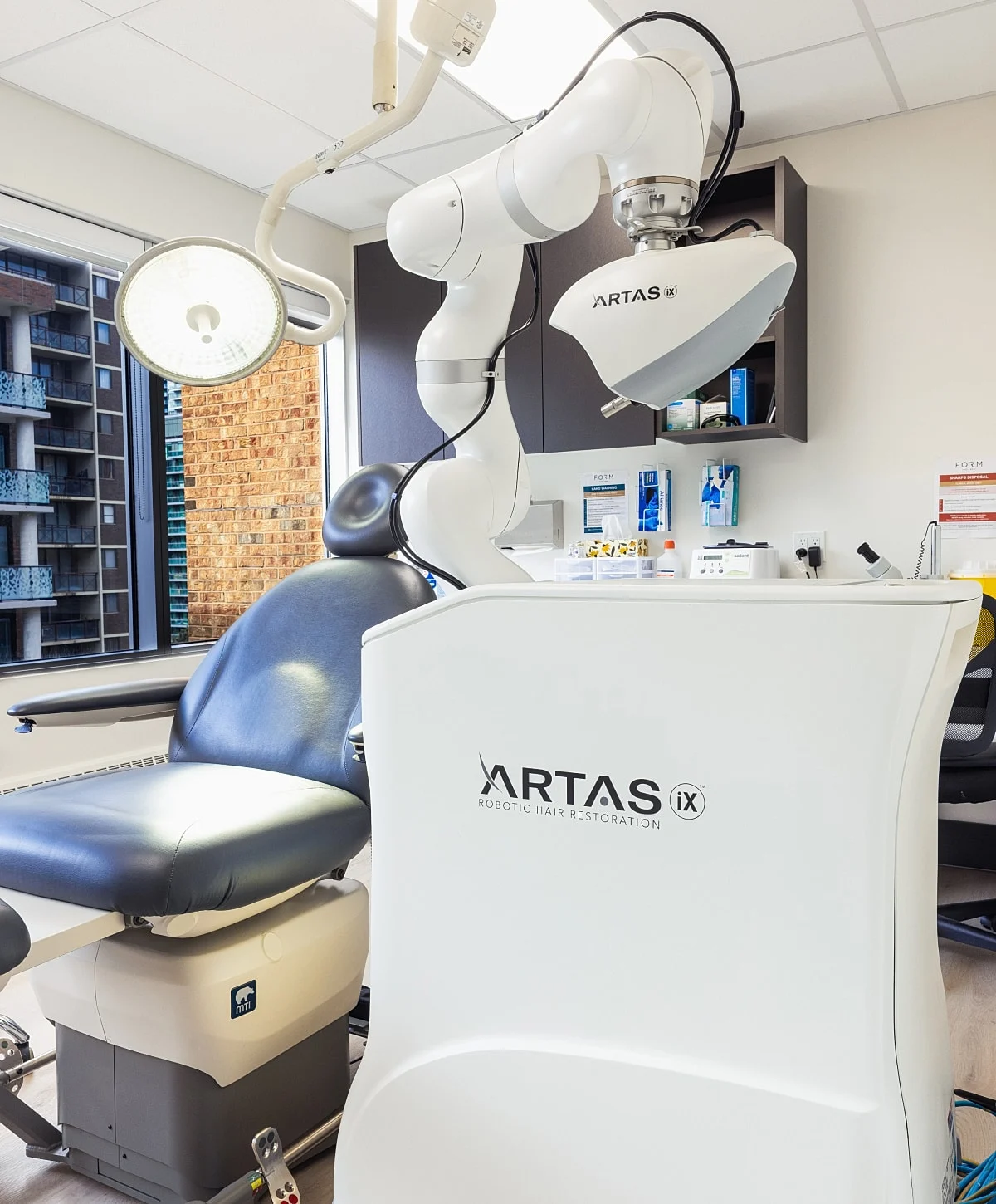
For example, FORM's robotic hair-restoration program describes Dr. Brandt's role in assessment and planning alongside the use of the ARTAS system. If you are considering that approach, ask which stages would use robotic assistance and who would perform each part.
The same questions are useful when assessing any proposal. Who designs the hairline? Who harvests and places the grafts? Who makes clinical decisions during the procedure? Who sees you afterwards?
Ask the clinician to explain why the proposed method suits your circumstances. The answer should relate to your assessment and goals, as well as the available technique.
Your available hair is part of the decision
A transplant works with hair you already have. Candidates need enough healthy donor hair and the ability to grow hair in the area being treated. Existing hair can also continue to thin after transplantation.
That makes your own hair loss and donor supply essential parts of the consultation.
“A good hair transplant isn't about moving the maximum number of follicles,” Brandt says. “It's about using the available hair intelligently.”
Ask what the assessment reveals about your available hair, how it affects the proposed coverage and what further hair loss could mean for the result. You do not need to know the answers before you arrive. Those are reasons to have the assessment.
Ask about the years ahead
It is natural to focus on the appearance you want after treatment. Give the longer view some attention, too.
How might your hair change? What follow-up would be appropriate? Could further treatment be considered, and what would influence that decision?
Brandt describes his aim as creating results “designed to look natural for years to come.” Discussing how the plan accounts for future changes helps make that intention more concrete.
Alongside design, make sure you understand the procedure's risks, recovery and alternatives. The right questions extend beyond the day of surgery.
Recovery and follow-up belong in the comparison
A clear proposal should help you picture the period after treatment as well as the procedure itself.
Ask about washing your hair, sleeping, exercise, headwear and returning to work. If your job involves physical activity or being in front of clients, describe that rather than asking only when you can “go back.” The answer needs to fit what your days actually involve.
Discuss the difference between early healing and the later appearance of the transplant. Ask when the practice would assess growth, how progress is documented and what would happen if the result fell short of the agreed expectations.
There are risks to weigh, too. Bleeding, infection, scarring and poor graft growth are among those outlined in the MedlinePlus guidance. Have the clinician explain which risks are most relevant to you and what care would be available if a problem arose.
A lower price or a larger graft count is easier to interpret when you also understand who is providing the care and what happens after the procedure.
Leave with an explanation
You do not have to become an expert in graft counts to make a more informed decision.
You do need to understand why a particular number has been proposed for you, where the hair would go and what the clinician thinks is realistic. If the explanation is unclear, ask again.
The graft count belongs in the conversation. So does everything that gives it meaning.
Find more background on Dr. Michael Brandt and FORM Face + Body.
This article is for general information. Hair-transplant suitability, risks and expected results require an individual clinical assessment.
About Dr. Michael Brandt
Dr. Michael Brandt is a Toronto facial surgeon practising at FORM Face + Body. His work includes facial plastic and reconstructive surgery and hair restoration. Dr. Brandt performs deep plane, traditional and mini facelifts; neck lifts; eyelid surgery (blepharoplasty); lip lifts; chin liposuction; chin augmentation with implants; buccal fat reduction; and non-surgical rhinoplasty, also known as liquid rhinoplasty. He also leads FORM’s robotic FUE hair-transplant program in Toronto.